
Key Takeaways
- Flooring-specific pads prioritize biomechanical stability and a low profile.
- Non-marring materials such as TPR rubber are mandatory to prevent surface scuffs.
- High-density EVA foam and gel provides lightweight support that refuses to bottom out on concrete.
- NoCry offers a range of non-marring flooring pads, catering to different comfort and stability needs.
Why Do Flooring Professionals Need Special Knee Pads?
Installing a floor typically requires between 6 and 10 hours of nearly continuous kneeling on unforgiving surfaces. Generic knee pads may fail during these grueling sessions because they lack the wide coverage and ergonomic structure required for sustained contact. Without professional-grade gear, installers face a high risk of bursitis and long-term joint fatigue caused by inadequate weight distribution.
A low-profile design is also essential for maintaining balance. Installers must be able to lean forward and pivot without the pad catching on the material or wobbling. High-profile pads intended for roofing or heavy demolition may create instability, which increases the lateral shearing forces on the patella. Professional flooring pads are engineered to stay flat and stable, allowing for the precise movement necessary for a clean installation.
Do Hard Shell Knee Pads Damage Finished Floors?
Hard shell knee pads might damage finished floors in some situations. While some sealed hardwood or tile is usually safe, grit or debris trapped under the plastic caps, or rough edges on worn pads, might scratch or dull surfaces. Very soft or delicate finishes, like oil‑finished wood or older floors, are also more at risk. To reduce the chance of damage, keep floors and pads clean, and choose non-marring knee pads with cushioned or gel-coated caps.
In the flooring trade, “non-marring” refers to soft outer materials that grip the floor without leaving marks. Materials like TPR rubber, neoprene, and soft foam are ideal because they lack exposed plastic edges that could gouge a surface. In contrast, hard shell caps made of polyethylene are best reserved for subfloor preparation or demolition where protecting the final finish is not a concern.
To ensure finished hardwood and various laminate or vinyl products remain in pristine condition, professionals opt for soft caps or fabric-covered versions. Wide, flat caps further protect the floor by spreading the installer’s weight across a larger footprint.
Is Gel or Foam Better for All-Day Kneeling?
Gel cushioning utilizes a thick layer of viscous material that conforms to the unique shape of the installer’s knee. This provides the highest level of pressure distribution, making it the preferred choice for those spending the majority of their shift on the floor. While gel offers superior impact absorption, it is often heavier and may feel warmer against the leg during high-intensity work.
Foam cushioning, particularly closed-cell EVA foam, offers firm and consistent support at a lighter weight. This material does not absorb moisture, which is a major advantage on damp or dusty job sites. However, standard foam can compress over time. It is vital to use high-density foam to ensure the pad does not “bottom out” against hard concrete. Many installers now prefer hybrid gel-foam systems that use a gel core for comfort and foam outer layers for structural integrity.
What Are NoCry’s Best Knee Pads For Flooring?
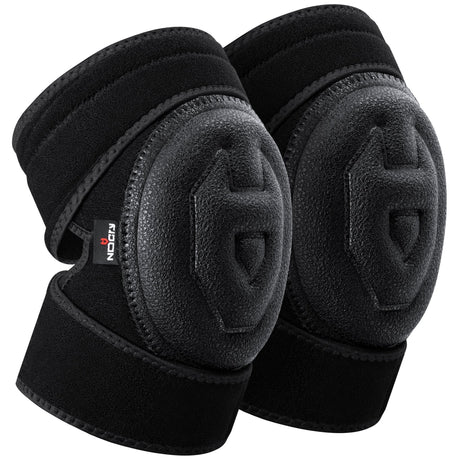
We offer several knee pads that are great for flooring work, combining comfort with floor protection. Our gel and foam models feature non‑marring, anti‑slip surfaces that help prevent scratches on hardwood, tile, or vinyl while supporting long periods of kneeling.
SupportGuard Pro
Engineered for extended kneeling, these gel‑enhanced pads use a dual‑layer gel and high‑density EVA foam core to absorb impact and spread pressure evenly across the knee. A soft, non‑marring PVC cap protects surfaces, while reinforced neoprene and silicone‑lined straps lock the pads in place for stable support on flooring tasks.
LightGuard Pro
Premium knee pads with a dual-layer core of high-density foam and gel and a wide contact area that evenly distributes load and reduce knee stress. The leather cap provides non-marring grip on tile, hardwood, and vinyl, while reinforced straps with heavy-duty stitching ensure a secure, stable fit without slippage.
SupportGuard+
These lightweight knee pads rely on thick, high‑density EVA foam cushioning to provide responsive support with less bulk. The soft cap is non‑marring to finished floors, and adjustable hook‑and‑loop straps with silicone edging keep the pads secure without slipping, making them ideal for flooring installers who need reliable support without extra weight.
LightGuard+
Lightweight and flexible, these foam pads provide high-density EVA support with anti-slip soles. Perfect for installers who need a slim, agile pad for precise movements on delicate floors. The wide contact area ensures even weight distribution while preventing surface damage.
EasyGuard
Ultra-lightweight and low profile, these knee pads use dense EVA foam to cushion your knees with minimal bulk. While they’re not designed for long hours of heavy work, the ergonomic foam and abrasion‑resistant shell offer reliable short‑term protection and a non‑marring grip on finished floors
Conclusion
Viewing knee protection as a long-term investment is essential for anyone in the flooring trade. By selecting the right non-marring materials and ensuring an ergonomic fit today, you protect your physical health and the quality of your finished work for years to come.
FAQ
What makes a knee pad non-marring?
A non-marring pad uses soft outer materials like TPR rubber or foam and features a wide contact area with no exposed plastic edges. This combination spreads weight and prevents surface gouges.
How often should I replace my flooring knee pads?
For daily professional use, foam-only pads should be replaced every 3 to 6 months as the material compresses. Gel pads are more durable and typically require replacement every 6 to 12 months.
Can I wear flooring knee pads on bare skin?
Yes, but it is not recommended. Wearing pads over moisture-wicking work pants provides a necessary barrier that reduces sweat-induced irritation and prevents the straps from chafing the back of the knee.