



Wearing gloves as a mechanic protects your hands from cuts, burns, chemicals, and grime while giving you better grip on tools and parts.
Safety DispatchGuides from NOCRY
By trade
Best Gloves for Mechanics: Tackling Tough, Oily Tasks Safely
Protect your hands from oil and sharp parts without losing dexterity or risking skin health with the best gloves for mechanics, for secure and precise work.
Key Takeaways
- Nitrile is non-negotiable when looking for the best gloves for mechanics; latex and vinyl degrade when exposed to petroleum.
High puncture resistance protects hands from sharp edges and abrasive surfaces in engine bays.
Seamless knit construction and microfoam coatings provide the dexterity needed for small screws and delicate wiring.
Knuckle guards and cut-resistant fibers shield hands from impacts, rusted metal, and jagged edges during heavy engine and suspension work.
Choosing the right fit and material prevents long-term injuries, keeps hands comfortable, and ensures control on every task.
What Are The Best Gloves for Mechanics Made Of?
If you are still spinning wrenches with latex, you are begging for a failure. Nitrile butadiene rubber (NBR) is the professional standard because it is chemically engineered to withstand petroleum-based products. Unlike natural rubber, it stays structurally sound when it meets high-octane fluids.
Data from GloveNation proves the point. Nitrile earns an “Excellent” rating for Gasoline, Diesel Fuel, and Brake Fluid. Meanwhile, latex is rated “Poor” for diesel and “Fair” for brake fluid. Master mechanics agree that contaminants are a daily battle, and nitrile keeps those fluids off your skin.
Beyond the chemistry, nitrile gloves such as our EcoFit model offer three times the puncture resistance of natural rubber. This durability protects you from sharp snags and abrasive surfaces. When you’re elbow-deep in an engine bay, you need a material that repels chemicals and resists tears without softening or swelling.

Can You Balance High Dexterity With Heavy Protection?
Tearing down an engine with the wrong gear is like trying to eat soup with a fork. You’ll get the job done, but it’s going to be a messy, frustrating headache. Modern PPE engineering allows you to maintain feel for the tiniest screw while keeping your hands guarded against grime and heat.
The secret lies in their seamless knit construction and flexible coatings. This design allows your hands to move freely while providing excellent grip and durability. NOCRY gloves like the EcoFit use a breathable, seamless knit base with a microfoam nitrile coating for a precise touch and reliable protection without bulk.
Models such as our SecureFit+ combine ultra-flexible fabric and reinforced palms to maintain dexterity while handling delicate parts. The anatomical fit prevents bunching at the fingertips, giving you the control needed to seat a ball bearing or manipulate a wiring harness with confidence.

What Features Are Needed for Heavy Engine and Suspension Work?
When you’re changing out rust-covered rotors or wrestling with a frame, the risk of skinned knuckles and crushing injuries skyrockets. You need more than a thin layer of rubber. You need mechanical defense that can absorb a blow when a wrench slips or a heavy component shifts.
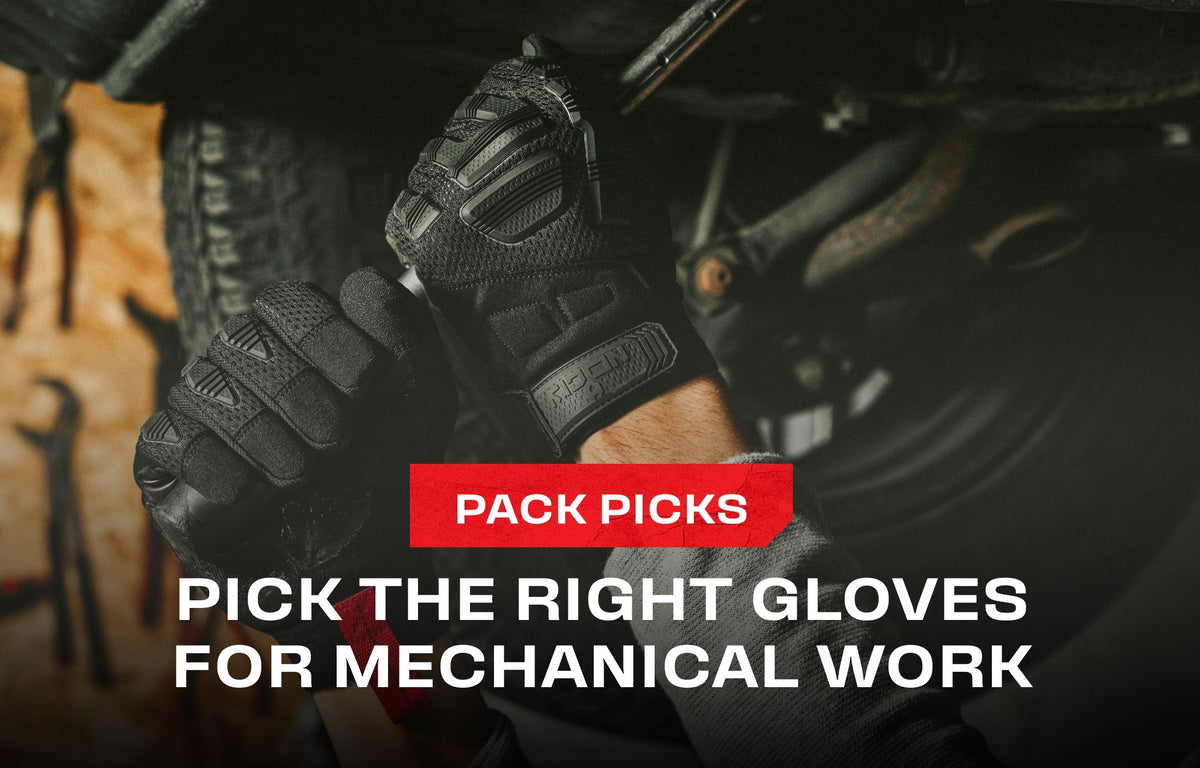
Look for gloves with TPR knuckle guards. These guards deflect forceful blows and vibration. These specialized tactical models are designed to shield the back of the hand from the high-risk hazards of heavy-duty suspension work.
For tasks involving sharp sheet metal or jagged edges, ANSI Level A3 cut resistance is the baseline. The CutGuard Pro utilizes these cut-resistant fibers to prevent lacerations. This protection ensures you can handle rusty metal pieces or sharp fasteners without a trip to the emergency room.

Conclusion
Stop treating your work gloves like an afterthought. Investing in the right grip today ensures you can keep doing what you love for a forty-year career. Proper protection prevents long-term nerve damage and chronic skin issues. Choose the right mil, the right material, and the right fit to keep your most valuable tools, your hands, ready for the next shift.
Bestseller


CutGuard Pro Tough Coated
PROCut-Resistant Safety Gloves For Work With Nitrile Grip Coating
4.3 415 reviews
$18.99
5-pack $17.09 each · free shipping
Choose pack

ToughFit Pro
PROHeavy Duty Work Gloves with Superior Grip and Impact Protection
4.5 235 reviews
$20.99
5-pack $18.89 each · free shipping
Choose pack
FAQ
Why should I wear gloves as a mechanic?
Are latex gloves okay for the garage?
Latex is a natural rubber that fails when it meets petroleum. It suffers from petroleum degradation, causing it to swell and tear. It also carries a high risk of developing skin allergies, making nitrile the superior choice for automotive chemicals.
How do I determine my glove size?
For NOCRY gloves, measure your palm at the widest part, excluding the thumb, and your middle finger. Your gloves should provide a snug fit for maximum control. If you are between sizes, the pro move is to choose the smaller size, as synthetic materials will stretch slightly during use.
Related Articles


Gloves, lifetime warranty, no registrationFrom $11.99
Shop
Built with, not at
Join the Pack panel
Real pros weigh in on what we build. Ideas in, prototypes out, your name on what ships. Tell us your trade and we'll send the next prototype call.